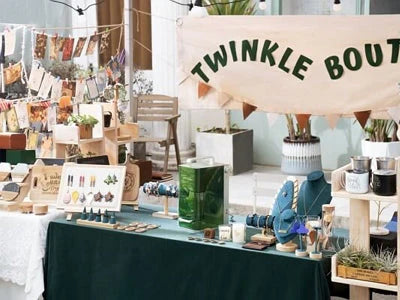
Why do customers prefer handmade items over others?Having people admire your handcrafted item is a fulfilling experience. What's even more fulfilling is offering your crafts for sale and making sales. It shows you're solving a real need and getting rewarded for your time and effort.
Selling crafts can be done both offline and online. If you opt to sell offline, you should know the right places to sell handmade items locally. Selling online is a different ballgame. One advantage is the sheer range of customers you can reach. More exposure, to a large extent, means more sales.

In this guide, you will discover all you need to know about selling crafts online. You will also discover easy ways of building a profitable online store for your craft business.
Before diving right into how to sell crafts online, you need to know if selling crafts online is profitable.
In This Article
- Is Selling Crafts Online Profitable?
- Step 1: Decide What to Craft
- Step 2: Determine Your Target Audience
- Step 3: Create Your Crafts
- Step 4: Choose Your E-commerce Platform
- Step 5: Build Your Online Store
- Step 6: Drive Traffic to Your Craft Store
- FAQs of Selling Crafts Online
- Conclusion
Is Selling Crafts Online Profitable?
Yes, selling crafts online is profitable, and it's a viable way of making a living in the twenty-first century. To get started, you will need to upload your crafts on Amazon Handmade, Etsy, or another online crafts marketplace. Displaying your crafts on these platforms is a sure way to reach a wider audience. However, having your handmade crafts on these platforms doesn't guarantee sales.
To generate sales, other pieces have to be in place. These pieces include:
- Creating high-quality crafts that people need. Put in the effort and resources needed to find good materials and use these materials to craft high-quality handmade crafts.
- Take compelling pictures of your crafts. Since your buyers are online, you need to upload sleek craft pictures that capture their attention.
- Pricing your handmade items the right way. Your pricing should be done in such a way that your production cost is covered.
- Adequate marketing of your products. Social media platforms, blogs, YouTube channels, and online advertising are great ways to market your products.
- Excellent customer service experience for your customers.
Before putting these pieces together, you will need to identify the right niche. After that, focus on the right audience. The right audience is people who will likely buy your handmade crafts.
Selling crafts online is profitable in the long run. Here are six easy steps to sell crafts online.
Step 1: Decide What to Craft
To decide what to craft, you can either learn how to craft a new item or stick to crafting a handmade item you know.
Learning to craft a new handmade item is somewhat easy. All you need to do is pick any profitable craft and start making it. By researching a few crafts, you can identify the right one that fits your style and personality.
Alternatively, you could decide to stick to crafting a handmade item you know. And if you're already a crafter who makes good handmade items, then you're up for some great time.
To get the best out of your craft-making process, you need to figure out the following.
- The equipment and materials needed for the crafting
- The time needed to craft each handmade item
- The production cost for each item
- Other business expenses associated with the crafting process
- The level of competition in your preferred niche market
- Why do customers prefer a handmade item over the other? You can get a clue of what customers are thinking by reading through the questions they ask online, and the feedback they leave with their previous sellers
- What your break-even price is
- The regulations, laws, or licenses associated with crafting within your niche market
As a general rule, choose handmade items that tickle your fancy. If you're not passionate about the craft you're making, you will quickly experience burnout.
Step 2: Determine Your Target Audience
Once you've chosen a craft, the next step is identifying who is most likely to buy it. Your target audience shapes nearly every decision in your business:
- What you make and how you make it
- The materials you use
- How you price your products
- How you brand your store
- How you package your items
- What your messaging sounds like
- Where and how you advertise
For example, if your audience is dog lovers, everything, form your logo, your product designs, your color palette, and your copy should speak directly to them. If your customer base skews toward Gen Z, the aesthetic needs to match: bold, current, and priced to fit early-career budgets. Launching premium high-end items to an audience that can't or won't pay for them is a fast way to stall before you start.
Get specific about who you're selling to. The clearer that picture is, the easier every other decision becomes.
Step 3: Create Your Crafts
At this stage, you roll up your sleeves and start building inventory. Source your materials, set up your workspace, and start producing. The goal is to have enough stock to launch without so much that you're sitting on unsold inventory.
The right equipment makes a significant difference, both in the quality of what you produce and in how fast you can produce it. That's where laser cutting machines come in. The machine you choose directly affects your output speed, consistency, and the range of materials you can work with. For most crafters, a CO2 laser cutter is the most versatile option. It handles wood, acrylic, leather, fabric, and more, all from a single machine.


As a crafter who just started a craft business, you need to take things a bit slow. After all, you don't know how your products will perform once you launch them into the market. Start with a small inventory, and monitor your sales over time. Once you have a feel for how many items you sell per month, you should adjust your production process to cater to the product demand.
Creating your crafts becomes dramatically easier and more profitable with a powerful, automated laser like the xTool P3. Its 80W CO₂ laser (with optional 5W IR module) delivers faster cuts, cleaner edges, and the ability to handle thicker materials while opening new revenue streams through metal and plastic engraving. The massive 914 x 457 mm work area (2,3x larger than previous models) lets you tackle bigger projects or efficient batch production, and the built-in Automated Creation System™ (ACS™) with AutoLift Base, LiDAR autofocus, and smart cameras minimizes manual setup so you can "place and go."
Step 4: Choose Your E-commerce Platform
When it comes to selling crafts online, you can either sell on an existing online marketplace or build your own custom website. Both work but they serve different stages of a business.
Any of the options are good. However, using a custom website comes with several advantages including:
- Absolute control over your online store. And that includes the messaging, branding, and pricing showcased on the online store. You will also have control over the user experience.
- There are little to no listing and subscription fees when it comes to custom websites. This will, in turn, help you generate high-profit margins.
- You have complete access to the customer journey. This helps you ascertain that your customers have the best experience during the customer journey. It also helps you optimize your customer retention process.
- Custom websites offer full ownership over customer data and sales process.
- Custom websites are built with business features that help accelerate your growth process. These features also help in streamlining your sales process.
If you build your custom website using ecommerce platforms, here are some things to consider when choosing a platform.
- The setup process: If you don't have advanced technical skills, or hiring a professional web developer seems to be an issue, use platforms where optimizing and adjusting your web store can be done with drag-and-drop editing tools. And no coding skills are needed for the entire setup process.
- Speed, reliability, and security: Opt for e-commerce platforms where the cybersecurity system is top-notch. Such platforms will help you keep your customer data, and business content safe. You should also look out for e-commerce platforms that will help you scale up your business. Simply put, the platform should be able to handle high-volume traffic without lagging. Look out for the web load speed of the platform, and how it performs on multiple devices.
- Office tools: Your preferred e-commerce platform should include web-building services and office tools. Office tools could be app integration and automation tools needed for the smooth running of the business.
- Multichannel tools: Look out for a platform where you can easily integrate third-party platforms like social channels. It should also permit the integration of data entry tools, and other tools that will ease your business operations.
- Support: An excellent support team should be a must-have for your preferred ecommerce platform. The platform should have a support team that's accessible on chats, and other channels. They should also offer valuable self-help resources on their platforms.
Step 5: Build Your Online Store
There are a plethora of web-building platforms out there. These are drag-and-drop web-building platforms that can help you build a sleek e-commerce platform with just a few clicks of the button. Common ecommerce web-building platforms are Shopify and Woocommerce. Creating an account on these platforms is free — but you have an option of unlocking more features by opting for the paid plan.
Here are ways of getting the most out of these web-building platforms.
- Choose a sleek design: Web building platforms come with a wide range of already-made templates. You can customize your online store with the drag-and-drop editor. Ascertain that the mobile version of your online store is okay. Optimize every element to fit your craft business.
- Upload your crafts onto your product pages: Take high-quality photos of your craft items and upload them onto the product pages of your store. For instance, if you make personalized tumblers, take professional photographs and videos of your items and upload them onto your online store. Every product image should come with a comprehensive product description on each product page.
- Web pages should tell your brand story: Share your unique brand story on the "About Us" page of your website. You should also share the missions, values, and other vital information about your craft business. You can also shine some spotlight on your team members. Always aim for genuineness and authenticity — that's a sure way to connect with your customers.
- Write your store policies: return, exchange, and shipping policies should be written on your online store. Customers should know what to expect when it comes to shipping fees.
- Use the right payment processing platforms: Setting up good payment processing methods is a way to streamline your customer payment experience. Your preferred web builder should accept credit/debit cards, Afterpay, PayPal, Apple Pay, and other popular payment methods.
- Launch your online store: At this stage, all you need to do is connect your custom domain to your online store and hit the publish button.
Step 6: Drive Traffic to Your Craft Store
After launching your online craft store, you will have to drive traffic to the store. To get started, focus on one marketing channel before moving to another. Here are methods to drive traffic to your online craft store.
- Use social media platforms: Share your craft business content on social media platforms like Instagram, Facebook, and Pinterest. Always publish original, fresh content on your social media account, and engage with your audience in the comment section of these platforms. When properly done, you will grow a community of loyal customers on your social media accounts. You should also consider launching a YouTube channel where you create video tutorials, and share tips about your handmade items.
- Create a valuable resource center (blog): A free blog on your online store is a sure way to keep your audience updated with recent discount offers and promotional content. You can also use a blog to offer valuable material to your audience. All these help in boosting your credibility and authority in your niche. Creating a blog is a long-term marketing strategy that requires enough resources, time, and energy to manage.
- Run online ads: Running paid online ads is a quick way to increase your visibility and attract new customers. You should consider running Google Ads, Facebook, and Instagram Ads.
- Organize webinars and workshops: Live webinars and workshops are sure ways to showcase your work to people. This strategy also helps the crafter to build better relationships with their customers.
FAQs of Selling Crafts Online
What’s the Best Platform for Selling Crafts Online?
There's no one-size-fits-all platform for selling crafts online. Crafters who want to get the most out of their business should take advantage of multiple platforms when it comes to selling crafts online. As a general rule, you should opt for both online craft marketplaces, and a custom online store.
There are many good online craft marketplaces to showcase your items on. To increase your chances of getting sales, showcase your handmade items on two or more online marketplaces.
When it comes to building an online store, you should build your online store using any of the popular web-building platforms like Shopify.
What Handmade Items Sell Best?
Welcome door hangers, ceramic tile wall art, and jewelry are sure handmade items that are in great demand in the marketplace.
Hint: Here is a list of 20 profitable crafts to make and sell.
Conclusion
The online store is a virtual representation of your brand. It's also a channel that helps you show the world what you have to offer. The theme, font size, and overall style of your online store should reflect your brand offering and who you are targeting.
The one factor that will help you grow a profitable online craft business is having a clear vision, and staying true to it. Everything else becomes secondary — and that includes your online store, your customers, and your marketing channels.
Your primary objective should be to offer your customers the best quality handmade items and provide an excellent customer experience for them. If these two pieces are not in place, attracting and retaining paying customers will be an issue.
Now you know everything that goes into selling crafts online, what web-building platform will you use to create your custom online store?
For more questions. Please join our Facebook group to get inspired!